Setting a new standard:
how one team is reshaping carbon in rail infrastructure
Decarbonising infrastructure renewals has long been seen as one of the toughest challenges in transport. But the carbon team within the Southern Renewals Enterprise is proving that assumption wrong by delivering measurable reductions, embedding new ways of working, and setting a benchmark for the wider rail industry.
Published: 27 May 2026
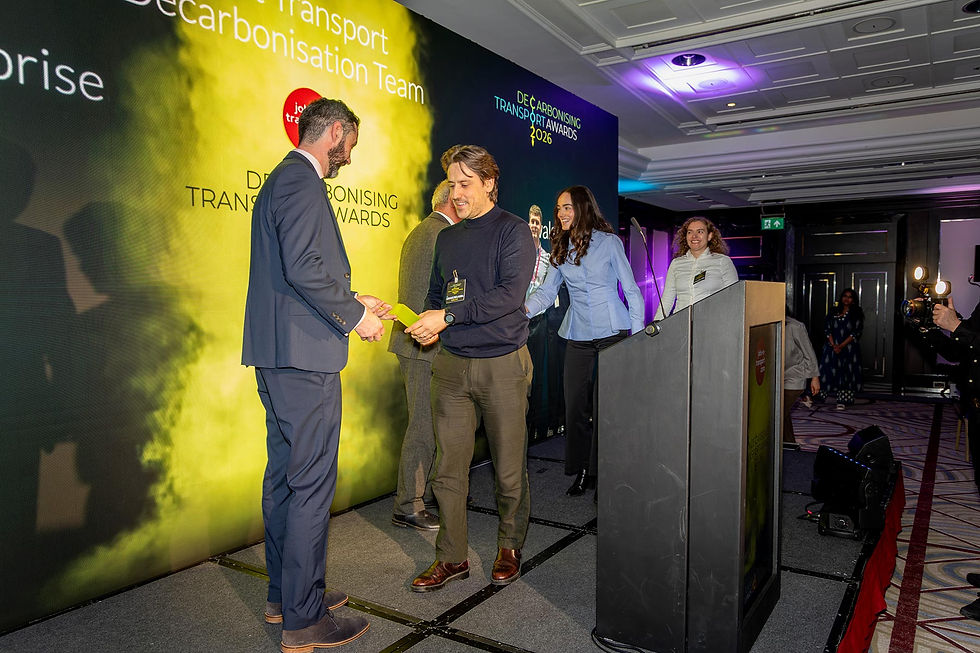
Image: Southern Renewals Enterprise collecting their. 2026 Award for Best Decarbonising Team. Event organised by Landor LINKS

The challenge – decarbonising renewals
Decarbonising rail renewals has long been regarded as one of the most complex challenges in the transport sector. Traditionally, renewals have followed a “like‑for‑like” replacement model, with end‑of‑life assets replaced by identical modern equivalents. While this provides certainty and continuity, it has limited opportunities to challenge materials, construction methods and design assumptions, meaning embodied carbon and whole‑life emissions have not always been fully considered.
Innovation has also been viewed as difficult within renewals. Delivering work on a live railway involves tight access windows, standardised assets and a strong focus on risk management, reinforcing the perception that decarbonisation could compromise time, cost or safety.
This challenge is intensified by scale. SRE is a 10‑year programme covering 544 stations, 3,300 miles of track, 4,986 bridges, 895 level crossings and 7,990 signals. Renewing assets at this scale requires large volumes of carbon‑intensive materials, plant and logistics. However, it also presents a powerful opportunity: even modest improvements, applied consistently, can deliver significant carbon savings.
Decarbonising rail renewals therefore requires a fundamental shift, moving beyond asset replacement alone, and using the scale and longevity of programmes like SRE to embed carbon reduction into everyday decision‑making while continuing to deliver a safe, reliable railway.

The team behind the transformation
The team is led by Victoria Trudgill, Carbon Lead, and championed by Lewis Chenery, Environment & Sustainability Director, who together set the strategic direction for carbon reduction across the 10‑year programme. Their leadership combines a strong technical understanding of rail renewals with a clear focus on culture, capability and long‑term change, positioning carbon as a core performance consideration alongside safety, cost and delivery.
Supporting this is a strong core team. Harry Rogers, Carbon Manager, who works directly with engineers, project teams and suppliers to turn ambition into delivery‑ready solutions, and Flora Wilson, Carbon Modeller, who provides robust carbon modelling and leads the development of SRE’s carbon training capability.
What sets the team apart is the way technical expertise and data are combined with behavioural insight, recognising that decarbonising rail renewals depends as much on influencing people and ways of working as it does on materials and technology.


A new kind of delivery model
SRE operates as a Project 13 enterprise, bringing together Network Rail as the Capable Owner, the Southern Integrated Delivery (SID) partners (AtkinsRéalis, VolkerRail, VolkerFitzpatrick, Octavius and Network Rail), and a wider ecosystem of suppliers to renew the Southern Region’s asset portfolio over a 10‑year period.
This model moves away from traditional client–contractor relationships towards a genuinely collaborative, one‑team approach, with all parties aligned around shared outcomes rather than individual contracts. By formally embedding the ecosystem within the enterprise, suppliers are engaged early and treated as long‑term partners, creating the conditions for innovation, consistency and delivery of improvements, including decarbonisation, at scale.

Carbon snapshot
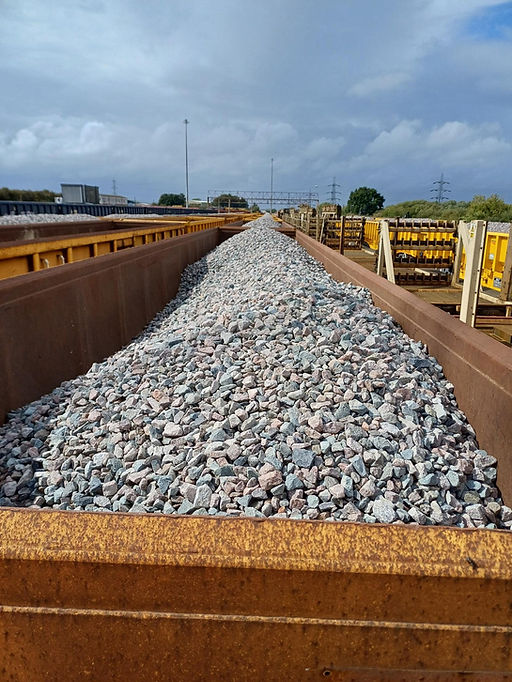
SRE achieved a landmark 63% carbon reduction on the Honor Oak Park to Forest Hill renewals site, a best-in-class rail delivery using low carbon sleepers, green steel, blended ballast, and HVO locomotives. Across the wider programme, the team exceeded both its expected and stretch targets, achieving a 10.2% carbon reduction across all assessed lifecycle stages in Y1, surpassing the initial 5% goal and 9% stretch target. This was then built on in Y2, achieving a 14.3% reduction, surpassing the 9% goal and 14% stretch target.
This level of quantification and reduction has never before been attempted within renewals. In a sector traditionally viewed as constrained by “like for like” replacement, SRE has demonstrated that meaningful and measurable carbon reductions are achievable, and in doing so, they have set a new standard for the rail industry

Innovation in practice:
A data-driven carbon management system
To move decarbonisation from aspiration to action, SRE developed a suite of practical, data‑driven tools that give teams clear visibility of carbon impacts and opportunities. Central to this is the Carbon Literacy Hub, which provides accessible training, guidance and resources tailored to rail renewals roles. This is supported by an interactive visualisation dashboard, carbon opportunity trackers, and lifecycle carbon modelling and forecasting (using the RSSB carbon tool), allowing carbon performance to be measured consistently and transparently.

Embedding carbon into decision-making
These tools directly influence delivery by enabling teams to identify carbon hotspots early, whether materials, construction methods or logistics, and compare lower‑carbon alternatives before decisions are locked in. Carbon is considered alongside cost, safety and performance, ensuring it becomes part of everyday renewal decision‑making rather than a retrospective check.
Collaboration and integration
Carbon reduction within SRE is not delivered as a standalone function but is fully embedded into the enterprise delivery model. The carbon team works directly alongside project managers, engineers and commercial teams, shaping decisions as schemes are developed rather than reviewing outcomes retrospectively.
Discipline‑specific carbon plans were co‑developed with delivery teams, ensuring that carbon actions were practical, owned and relevant to real‑world constraints. Progress is tracked through bi-weekly check-ins with the partners and monthly performance reviews with senior leadership, maintaining visibility, accountability and momentum across the programme.

Supply chain engagement
Through the Project 13 enterprise model, SRE moved from a traditional supply chain to a true ecosystem approach. Suppliers are actively engaged through innovation sessions and early collaboration, helping to identify and adopt low‑carbon materials, methods and plant. This was evidenced through the SRE team hosting an ecosystem supplier session with Scott Parnell to showcase their innovative and cost saving products to drive carbon reduction. This long‑term partnership approach has been critical to delivering carbon reduction at scale.

Culture and behaviour change
SRE recognised that lasting decarbonisation depends on changing behaviours as much as changing technology. The programme focused on building carbon confidence and ownership across delivery teams, moving carbon from a specialist topic to a shared responsibility.
Regular briefings, engagement with project teams and the availability of practical resources through the Carbon Literacy Hub have helped raise awareness and confidence, encouraging teams to question established practices and consider carbon impacts as part of routine decision‑making.

Training and skills development
SRE has taken a practical approach to building carbon capability by investing in people as well as tools. Flora Wilson is undertaking Carbon Literacy training, delivering sessions in partnership with Network Rail as part of the certification process, while strengthening in‑house expertise and rolling out a suite of carbon literacy training. Victoria Trudgill has completed change management training, supporting effective behaviour change across the programme. Carbon knowledge is shared more widely through briefings with design teams and internal resources hosted via the Carbon Literacy Hub, helping to build understanding and confidence over time.
Why this stood out
The judges were particularly impressed by how SRE brought together an integrated, multi‑organisation enterprise to place carbon reduction at the heart of a renewals programme traditionally viewed as difficult to decarbonise. Rather than delivering isolated trials, SRE acted as a pilot for the industry, demonstrating what is possible when carbon strategy, data, delivery and culture are aligned.
By achieving measurable carbon reduction at scale, embedding carbon into everyday decision‑making, and creating tools and capability that can be replicated elsewhere, SRE has set a new benchmark for rail renewals. The judges noted that, if adopted more widely, this approach has the potential to be nationally transformational for the rail industry.
Scaling and replication
SRE’s approach has been designed with replication in mind. The tools, data frameworks and Carbon Literacy Hub can be applied across other Network Rail regions as well as the broader industry as a whole, while lessons learned are already informing procurement practices, including supplier scoring and contract requirements. By embedding carbon capability rather than relying on bespoke solutions, SRE has created a model that can scale across the wider rail network.
What happens next?
Building on this success, the team is focused on driving further reductions across future workbanks, expanding lifecycle assessment coverage and strengthening supply‑chain collaboration. Ambitions include continuing to surpass stretch targets, deepening skills across delivery teams, and continuing to embed carbon as a core performance metric across SRE.
Role in wider transport decarbonisation
Infrastructure renewals represent one of the largest and most immediate levers for transport decarbonisation, due to their scale, frequency and material intensity. By proving what is possible in rail renewals, SRE has demonstrated how infrastructure owners and delivery partners can play a pivotal role in delivering net zero, with lessons that extend well beyond the rail sector.

Personal / team insight
The team is motivated by the opportunity to challenge long‑held assumptions about what is possible in rail renewals and to prove that decarbonisation can be delivered alongside safety, performance and cost. There is a shared drive to leave the industry in a better position than it was found, by building capability as well as reducing carbon.
The biggest breakthrough moment came when carbon shifted from being seen as a constraint to becoming a useful decision‑making tool, helping teams identify better outcomes, often at lower cost, rather than additional burden.

SRE would encourage other teams to enter the Decarbonising Transport Awards, regardless of where they are on their journey. Decarbonisation does not require perfect answers from the start, it requires leadership, collaboration and the courage to try something different. The biggest impact comes when carbon is embedded into everyday decisions and owned by everyone involved.
Register interest
Join our mailing list today to receive important announcements and news about the Decarbonising Transport Awards
Decarbonising Transport Awards 2026 Winner
Best Transport Decarbonisation Team : Southern Renewals Enterprise. Register here to stay notified about the awards.